Author Archives: Leslie Miller

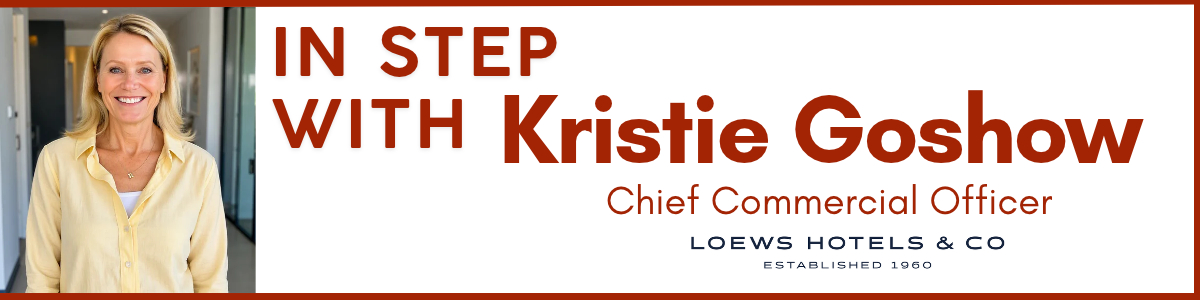
In Step with Kristie Goshow, Chief Commercial Officer, Loews Hotels & Co

“A Loews meeting delivers the confidence of flawless execution for planners and an experience so memorable for attendees that it turns a business trip into a lasting connection with our brand.”


The expectations surrounding meetings continue to evolve. Attendees want productive sessions and seamless logistics, but they are also looking for meaningful experiences, opportunities to recharge and a stronger connection to the destinations they visit.

At Loews Hotels & Co, that mindset is influencing everything from wellness programming and culinary experiences to local partnerships, meeting spaces and the way the brand collaborates with planners.

We spoke with Kristie Goshow, Chief Commercial Officer, Loews Hotels & Co, about what planners should know now, how customer feedback is shaping the Loews meeting experience and how the brand is creating more meaningful ways to gather.

What’s the main story you want planners to know right now?

At Loews Hotels, we’re rethinking what it means to gather. Today’s attendees want more than a meeting agenda. They want experiences that help them connect, discover, recharge, and leave feeling that their time away was truly worthwhile.

That mindset drives everything we do, from wellness-focused offerings to destination-driven experiences, signature culinary programming like Flavor by Loews Hotels, and thoughtfully curated local partnerships through Local by Loews Hotels that help attendees connect more deeply with the places they visit. We’re constantly asking how we can create experiences that are more meaningful, more memorable, and more reflective of the destinations where we operate.

Many of our most successful innovations are shaped directly by planners and customers through our Customer Advisory Board. They challenge us to think differently, and we welcome it. The best ideas often come from collaboration, and we believe the future of meetings will be built through partnerships that push both our brand and our industry forward.

What has changed recently that planners should know?
One of our most exciting recent launches is Active Stays by Loews Hotels, wellness programming designed to help travelers maintain healthy routines while on the road. The program includes in-room workouts available on guest-room TVs, destination-inspired fitness experiences, wellness partnerships, and recovery-focused food and beverage offerings that support the way guests want to travel today.

Active Stays is about more than fitness. It reflects a larger shift in how we think about meetings and hospitality. Attendees don’t separate their well-being from their business travel experience, and neither do we.

At its core, Active Stays was built around a simple belief: movement, play, and wellness help people become happier, healthier versions of themselves. As we often say, “Travel should enhance the way you live, not interrupt it.”

The program was created to help attendees return home feeling energized rather than depleted, while giving planners new opportunities to support both personal well-being and professional success.

What types of meetings are the best fit for your properties?

One of the advantages of our portfolio is its flexibility. We host everything from executive retreats and incentive programs to association meetings, citywide conventions, board meetings, and large-scale corporate conferences.

What distinguishes Loews is our ability to deliver highly customized experiences regardless of program size. Across our city hotels and destination resorts, planners will find traditional meeting environments, outdoor venues, studio-style spaces, and distinctive gathering places.

Looking ahead, we’re expanding those possibilities even further with spaces like the Crossroads Barn, a venue rooted in the Texas landscape and designed to blend rustic character with modern luxury. The standalone venue will be part of more than 83,000 square feet of flexible indoor and outdoor meeting and event space at our newest Arlington hotel, Americana by Loews Hotels, slated to open in early 2029.
Complementing this addition, we continue to invest across the portfolio through enhancements at Loews Nashville Hotel at Vanderbilt Plaza, Loews Miami Beach Hotel, and beyond.

Because we are an owner-operator, we’re exceptionally agile. Decisions can happen quickly, ideas can move faster, and our teams have the flexibility to adapt to planners’ evolving needs. We take pride in our culture of ownership and accountability, where every team member is invested in the success of an event.

We also believe meeting attendees deserve the same caliber of experience as a leisure traveler. That’s why we continually invest in innovative culinary and beverage programming like Alchemy by Loews Hotels, destination experiences, and hospitality touches that transform a conference into something attendees remember long after they’ve returned home.
What makes planning an event there easier?

Our planners often tell us that what sets Loews apart is the partnership. We take the time to understand what success looks like for each customer and work alongside them from sourcing through execution.

Just as importantly, we listen. Feedback isn’t simply collected at Loews; it’s acted upon. Insights from planners directly influence how we design products, evolve services, invest in technology, and create new meeting experiences. Many of the enhancements across our portfolio today can be traced back to conversations with customers who challenged us to think differently.

That commitment to continuous improvement, combined with experienced teams, responsive communication, and a collaborative approach, helps planners feel confident that their event is in good hands.

Is there an incentive or offer we should highlight?
Absolutely. Our “The Future is Bright with Loews Hotels” promotion rewards planners who are thinking ahead, offering a 5% room revenue credit to the master account for qualifying programs.

Beyond portfolio-wide promotions, I encourage planners to have a conversation with our sales teams. One thing that has always differentiated Loews is our willingness to be creative. Whether it’s customizing an offer, developing a unique attendee experience, or finding ways to maximize value, we’re focused on building solutions that work for each customer’s goals.

Planners should also explore our MVP rewards program and bonus point opportunities, which continue to provide meaningful value and recognition for bringing business to Loews Hotels.
How would you describe the Loews meeting experience in one sentence?

“A Loews meeting delivers the confidence of flawless execution for planners and an experience so memorable for attendees that it turns a business trip into a lasting connection with our brand.”

Give Them Something to Talk About

You can deliver a flawless agenda, serve a great meal and keep every session running perfectly on time.
Those things matter.

But when attendees talk about your meeting weeks later, they may remember something entirely different.

The unexpected welcome. The incredible view. The conversation they had somewhere outside the meeting room. The local experience they didn’t see coming. The little detail that made them laugh.

Memorable meetings often include moments that interrupt the expected—and give people something worth talking about.

The good news? You don’t have to scare up a bigger budget to create them.

Surprise Works Best When It Has a Purpose

Unexpected doesn’t have to mean extravagant.

A surprise works because it breaks a pattern. After several traditional sessions, moving a conversation outside can feel fresh. After a long afternoon, an unexpected local treat can lift the room. A creative transition between sessions can reset attention without adding another major program element.

The question isn’t, “How can we wow everyone?”

Try asking:

“Where could we create one moment attendees aren’t expecting?”

That approach usually leads to more thoughtful—and more achievable—ideas.

Give People Something to Discover

People enjoy feeling as though they’ve found something.

Maybe it’s a hidden corner of the property, an unexpected food experience, a local story woven into the program or an activity attendees encounter rather than being formally assigned.

Discovery adds a little intrigue to the meeting experience.

It can also encourage conversation. When attendees have something new to notice, try or share, they suddenly have an easy reason to talk to one another.

And that can be especially valuable for groups where networking is important but forced networking can feel, well, forced.

Use the Destination as Your Secret Ingredient

Every destination has something distinctive.

It might be its food, landscape, history, architecture, entertainment, culture or personality. Bringing even one authentic piece of that into the meeting can create a moment attendees couldn’t have experienced anywhere else.

That matters because the more specific an experience feels to its location, the less likely it is to blend into every other event on the calendar.

You don’t have to fill the agenda with destination activities. One well-placed local moment may have more impact than several generic ones.

Make Room for Human Moments

Not every memorable experience needs to be programmed.

Sometimes what attendees need most is simply the space to connect.

An extended coffee break, comfortable gathering area, casual evening experience or unexpected pocket of unscheduled time can lead to the conversations people remember most.

It’s tempting to fill every available minute because attendees have traveled to be there. But sometimes creating room rather than adding content is the bigger idea.

Aim for a Few Great Moments

You don’t need every part of your meeting to be unforgettable.

In fact, trying to make everything extraordinary can become exhausting for everyone involved—including you.

Instead, identify a few places where you want to create an emotional lift, a sense of discovery or an opportunity for genuine connection.

Those are the moments attendees may photograph, share, mention over dinner—and remember long after the closing session.

Because when the agenda ends, one of the best measures of a meeting may be surprisingly simple:

Did you give people something worth talking about?


CPlanit Master Planner Tip
As you review your agenda, mark the moments where attendee energy is likely to dip or the day begins to feel predictable. Those are prime opportunities for a small surprise, change of setting or unexpected experience. You don’t need more programming—you may just need a better-timed moment.

Beyond the Ballroom: When the Destination Becomes Part of the Meeting

Ballrooms do a lot of heavy lifting. General sessions, breakouts, receptions, meals—they can handle almost anything a meeting agenda throws at them.

But that doesn’t mean everything has to happen there.

Sometimes thinking bigger simply means looking beyond the traditional meeting room and asking how the rest of the property—or even the destination itself—can become part of the experience.

This fall, consider opening a few more doors.

Start With the Spaces You Already Have

Before adding another off-site event or elaborate activity, explore what your host property already offers.

Could a terrace become the setting for a morning coffee? Could a restaurant host an executive dinner? Could a courtyard, rooftop, pool deck, lobby lounge or other unexpected space work for a reception or informal conversation?

Changing the environment can change the energy.

A discussion that feels formal around a conference table might feel completely different over coffee outdoors. A networking reception becomes more memorable when attendees have a view, a sense of place or something interesting happening around them.

You may not need another agenda item. You may simply need another setting.

Let the Destination Do Some of the Work

One reason attendees travel to meetings is the opportunity to experience somewhere different.

Look for ways to bring the destination into the program rather than treating it only as the backdrop.

Local food, neighborhood experiences, nearby attractions, cultural elements, entertainment and outdoor spaces can all help create a stronger sense of place.

That doesn’t necessarily mean scheduling a half-day excursion. Even a small destination-inspired moment can remind attendees that they are somewhere worth experiencing.

When the setting becomes part of the meeting, the event starts to feel less interchangeable.

Match the Space to the Moment

Not every part of the agenda needs the same environment.

Your general session may require a ballroom with full production capabilities. But a brainstorming session might benefit from a more relaxed setting. A leadership conversation may work better around a table in a private dining room. Networking could happen more naturally somewhere attendees can move around and explore.

Think about what you want people to do and feel during each part of the program, then choose the space accordingly.

Instead of asking, “Which room is available?” try asking:

“What environment would make this moment work best?”

That small change in perspective can lead to very different choices.


CPlanit Master Planner Tip
During your next site visit, ask your hotel or destination contact to show you three spaces groups don’t typically use for meetings. You may discover options that never appear on a standard floor plan—and one of them could become the most memorable setting of your event.
Remember the In-Between Spaces

Some of the most valuable moments at a meeting never appear on the official agenda.

They happen while walking between sessions, sitting together before dinner or continuing a conversation after the formal program ends.

Properties and destinations with inviting gathering places can help those moments happen naturally.

When evaluating venues, notice where attendees might linger. Look at lounges, outdoor areas, restaurants, common spaces and nearby experiences—not just square footage and capacities.

Those informal spaces can become an important part of the attendee experience.

Think Beyond Four Walls

Breaking the ballroom doesn’t mean abandoning traditional meeting space. It means using it intentionally while recognizing that a memorable meeting can unfold across an entire property and destination.

So as you plan your next program, take another look around.

There may be a rooftop waiting for a reception, a courtyard perfect for conversation or a destination experience that brings your group together in a completely different way.

Sometimes the best meeting room isn’t a meeting room at all.


CPlanit Tools Tip
Explore destinations and properties with the ConventionPlanit Search Directory, then use RFP Valet® to streamline sourcing, gather responses and compare qualified options side by side.

Steal This Idea: Inspiration From Outside the Meetings Industry

When you spend your days planning meetings and events, it’s easy to look to other meetings and events for inspiration. But some of the freshest ideas may be hiding somewhere completely different.

Theater. Museums. Restaurants. Festivals. Sporting events. Retail spaces. Even the way a favorite hotel welcomes you when you walk through the door.

This fall, take a look outside the usual meeting playbook. You don’t need to copy what another industry does. Instead, notice why an experience works—and consider whether that same idea could help you create a stronger meeting.

Borrow From Theater: Think About the Journey

Theater directors don’t think only about individual scenes. They think about the entire experience: how the audience enters, when energy rises or falls, when something unexpected happens and what people feel when they leave.

Your meeting has a rhythm, too.

Consider the transitions between sessions, meals and networking. Does the day move naturally, or does everything feel like one more item on the agenda? Could a change in room setup, music, lighting, location or format signal that attendees are moving into a different kind of experience?

Sometimes a small shift in pacing can make an entire program feel more intentional.

Borrow From Museums: Give People Something to Discover

Museums rarely ask visitors to absorb everything in exactly the same way. People wander, stop, interact and choose what interests them.

That idea can translate beautifully into meetings.

Instead of presenting every piece of information from the front of a room, look for opportunities to let attendees explore. Interactive displays, demonstration areas, conversation stations, visual storytelling or self-guided experiences can give people more control over how they engage.

Discovery creates curiosity—and curiosity keeps people involved.

Borrow From Hospitality: Pay Attention to the Small Moments

Great hospitality often comes down to details that make people feel noticed.

It might be a warm welcome, an easy arrival, a thoughtful amenity or someone anticipating a need before it becomes a problem.

When planning your meeting, look beyond the major agenda items and think about the moments surrounding them. What happens when attendees arrive? What do they encounter during a break? Is there an opportunity to surprise them with something useful, local or simply enjoyable?

Those small moments can have an outsized impact on how the entire meeting feels.

Borrow From Festivals and Sporting Events: Build Shared Energy

Part of what makes festivals, concerts and sporting events memorable is the sense that everyone is experiencing something together.

Meetings can create that same feeling without adding elaborate production.

A shared opening moment, unexpected destination experience, interactive group activity or even a playful tradition carried throughout the event can give attendees something in common beyond the agenda.

The goal isn’t spectacle. It’s connection.

Look Everywhere

Fresh inspiration doesn’t always arrive in a meeting room.

The next time you visit a restaurant, attend a performance, walk through
a museum or travel somewhere new, pay attention to what makes the experience work.

What draws you in?
What surprises you?
What makes you want to stay?
What do you remember afterward?

Then ask one more question:

Could that idea inspire something in my next meeting?

You may be surprised by where the answer leads.

CPlanit Master Planner Tip
Keep a simple “idea file” on your phone. When you experience something interesting—a creative welcome, clever use of space, memorable transition or unexpected detail—take a photo or jot down a note. Don’t worry yet about how you would use it. Build the collection first. When it’s time to plan your next meeting, you’ll have a library of inspiration ready to explore.

Does It Earn Its Place? A Purpose-First Audit for Your Meeting

Meeting agendas have a way of growing.

A general session is added. Then a reception. Another breakout appears. A sponsor activation gets squeezed in. Suddenly your attendees are scheduled from breakfast through an evening event with barely enough time to answer an email.

Every activity may sound worthwhile on its own.

But look at the program as a whole and ask:

Does each element earn its place?

Does it support an attendee need, a business objective or the experience you’re trying to create?

If the answer isn’t clear, it may be time to keep it, change it or cut it.

KEEP: What’s Working?

Start with the elements that consistently deliver value.

Maybe your opening keynote earns strong reviews. Perhaps a particular reception creates meaningful connections. An annual recognition program may be an important part of your organization’s culture.

Keep what works.

Purposeful planning doesn’t mean changing things simply to make the meeting feel new. It means understanding why something works and making sure it still serves the program.

CHANGE: What Could Work Better?

Some activities still have value but may need a different format.

Could a 75-minute presentation become a shorter talk followed by discussion?

Could a traditional panel become a facilitated conversation?

Could a reception include hosted introductions or smaller gathering areas to make networking easier for people who don’t already know the room?

Often, improving an experience doesn’t require a larger budget. It requires being more intentional about how you use the time and resources you already have.

CUT: What No Longer Serves the Meeting?

This can be harder—particularly when an agenda element has become a tradition.

Look for things such as:

  • sessions with consistently low participation
  • receptions squeezed between other functions
  • printed materials that go unused
  • giveaways included because you’ve always had one
  • off-site activities that create more logistics than enjoyment
  • content attendees have already received elsewhere

Cutting something doesn’t necessarily mean you’re offering less.

Removing lower-value activities can actually improve the overall experience by giving people more time and attention for the things that matter.

Protect Some White Space

One of the most overlooked elements of an agenda is non-meeting time.

Attendees need time to check email, make a call, process what they’ve learned, talk privately with a colleague—or simply recharge.

A schedule packed from morning to night can look productive on paper while creating diminishing returns in reality.

And if connection is one of your goals, some of the best conversations may happen in the spaces you didn’t formally program.

Experience the Meeting Like an Attendee

Step outside the logistics and walk through the day from their perspective.

Is registration easy? Do they know where they’re going? Do they have enough time to check in before the first function?

Are there meaningful breaks between long stretches of content? Is networking actually easy, or have you simply placed “Networking Reception” on the agenda?

Are they constantly walking from one end of the property to another?

Small friction points can have a surprisingly large impact on how the meeting feels.

Choose Experiences With Intention

Rooftop receptions, culinary events, local tours, entertainment and off-site experiences can all make a meeting memorable.

But bigger isn’t automatically better.

If your goal is conversation, an intimate local dinner could work better than a major attraction.

For recognition, an elevated evening experience may be exactly right.

And after two demanding days of sessions, an optional activity—or even a free evening—may be more valuable than another mandatory event.

Choose what fits the purpose rather than what simply sounds impressive.

Keep. Change. Cut.

Before you finalize the agenda, evaluate each major component:

KEEP it if attendees value it and it clearly supports the meeting.

CHANGE it if the purpose still matters but the format could be stronger.

CUT it if you have trouble explaining what it contributes.

Then take one final look at the complete experience.

Is there enough time to learn? Connect? Recharge?

If every major piece has a reason for being there, you’re doing more than filling an agenda. You’re designing the meeting with intention.


Master Planner Tip
Print your agenda—or look at it without all the operational notes—and review it entirely from the attendee’s perspective. For each major activity, ask, “What are they getting from this?”
If you can’t answer quickly, that element deserves another look.

Spend With Purpose: Where Your Meeting Budget Matters Most

Every meeting budget involves choices.

Sometimes you’re responding to rising costs or tighter resources. Other times, you simply need to decide where an additional investment will make the greatest difference.

Either way, thoughtful budgeting isn’t only about spending less. It’s about spending intentionally.

Instead of treating every line item equally, look at each expense through the lens of your meeting goals and attendee needs.

Start With What the Meeting Needs to Deliver

If education is the primary goal, speakers, technology and the learning environment may deserve protection.

If relationship-building matters most, shared meals, networking functions or experiences that encourage conversation could offer greater value.

If you’re focused on recognition and motivation, hospitality and memorable experiences may rise to the top.

This changes the budgeting question from simply “How much does this cost?” to “What does this contribute?”

You still need to consider cost—but now you’re evaluating it in context.

Protect What Matters Most

Identify the expenses that directly affect your ability to deliver a successful experience.

Depending on the meeting, that may include:

  • reliable audiovisual support
  • appropriate meeting space
  • accessibility
  • transportation
  • food and beverage
  • educational content
  • staffing
  • attendee-facing technology

Your priorities will be different for every program.

The important part is knowing what they are before you start making cuts. Saving money in the wrong place can quickly show up as attendee frustration, operational problems or a less effective meeting.

Invest Where It Will Be Felt

Not every enhancement is essential, but some investments can noticeably improve the experience.

Could one standout meal have more impact than slightly upgrading several functions?

Would better transportation reduce stress and give attendees more usable time?

Would investing more in your primary general session make a bigger impression than spreading production dollars across every session?

Rather than upgrading everything a little, identify the moments that matter most and concentrate your resources there.

Question the “We Always Do This” Expenses

Repeat meetings are especially prone to budget items that continue simply because they’ve always been there.

Review them with fresh eyes:

  • Do attendees still value this?
  • Is participation strong?
  • Does it support one of our current objectives?
  • Could this money have greater impact somewhere else?
  • Is there a simpler way to achieve the same result?

Removing something doesn’t automatically diminish the meeting. Sometimes it creates room in the budget for something more relevant.

Look at Total Value, Not One Number

The lowest room rate doesn’t always result in the lowest overall meeting cost.

Transportation, WiFi, AV, resort fees, meeting-room rental, F&B requirements and concessions can significantly change the final picture.

A venue with a slightly higher rate may ultimately provide greater value if it eliminates transportation costs, includes services you’d otherwise pay for or offers concessions that align with your priorities.

Compare the complete package, not just the headline number.

Ask Where Flexibility Exists

When the budget gets tight, involve your venue and supplier partners in the conversation.

Rather than only asking for a lower price, explain what you’re trying to protect and ask where alternatives might exist.

Different dates, menus, room setups, event timing or package options may reduce costs without sacrificing what’s most important.

Protect. Consider. Question.

A simple three-part review can help:

PROTECT — Expenses directly tied to your objectives, attendee needs or successful execution.

CONSIDER — Enhancements that could meaningfully improve the experience if resources allow.

QUESTION — Expenses included mostly because of habit, tradition or assumption.

The goal isn’t necessarily to create the cheapest meeting. It’s to make sure the way you spend reflects what matters most.


Master Planner Tip
Before making across-the-board cuts, rank your three most important meeting investments. Protect those first. Then look for savings in areas that have less influence on your goals or attendee experience. A smaller budget doesn’t have to mean a lesser meeting when you’re intentional about where the money goes.

Purpose Before Place: Define the Meeting Before You Source It

Planning a meeting often begins with a familiar list: dates, destination, sleeping rooms, meeting space, food and beverage, AV requirements and budget.

But before deciding where your meeting should happen, start with a more fundamental question:

What does this meeting actually need to accomplish?

A clear answer can shape almost every decision that follows—from your venue and agenda to your budget and attendee experience.

Start With the Outcome

Meetings serve different purposes. You may be educating attendees, building relationships, recognizing achievement, introducing a new strategy or bringing a distributed team together.

Most meetings have several objectives, but identifying the most important ones gives you a useful filter for everything that follows.

Ask yourself:

  • What should attendees know when they leave?
  • How should they feel?
  • Is there something you want them to do differently afterward?
  • Which relationships should be strengthened?
  • What would make stakeholders consider the meeting successful?

You don’t need a complicated mission statement. Three or four clear priorities can provide plenty of direction.

Let Purpose Shape the Venue

Once you know what the meeting needs to accomplish, your venue requirements become easier to define.

If collaboration is a priority, flexible breakout rooms and informal gathering areas may matter more.

If education is the focus, acoustics, sight lines, room configurations and technology rise on the list.

For an incentive program, destination appeal, service and shared experiences may carry more weight. An executive retreat may call for privacy and intimate spaces rather than a large meeting footprint.

The goal is to source based on fit, not simply availability.

A property can check every box on an RFP and still be the wrong environment for the meeting you want to create.

Define Your Non-Negotiables

Separate your wish list from the things that directly support success.

If networking matters, prioritize gathering spaces and opportunities for people to interact naturally.

If learning is essential, focus on room setup, technology and the ability to support different educational formats.

If convenience is important, consider accessibility, transportation, dining options and how easily attendees can move between guestrooms and meeting spaces.

Knowing your true priorities also makes it easier to compare properties without being distracted by features that are impressive but don’t meaningfully support your program.

Give Your RFP More Context

A strong RFP communicates more than specifications.

Instead of simply requesting space for a networking reception, explain that you want an informal environment where first-time attendees can meet colleagues easily.

Rather than listing four breakout rooms, share whether they’ll be used for presentations, roundtables or collaborative work.

That context gives a property the opportunity to recommend a room, setup or solution you may not have considered.

Use Purpose as Your Decision Filter

New ideas will appear throughout the planning process: another reception, an upgraded experience, a sponsor activation or a new agenda element.

Return to your original objectives and ask:

Does this help us accomplish what matters most?

If it does, explore it. If it doesn’t, you may not need it.

Clear priorities are equally useful when circumstances change. Budget shifts, availability issues and attendance fluctuations become easier to navigate when you already know where you can be flexible—and where you can’t.

Plan Backward From Success

Before searching destinations, comparing proposals or scheduling site visits, define the outcome you want your meeting to create.

Then work backward.

When purpose drives the process, your venue becomes more than the place where the meeting happens. It becomes part of how the meeting succeeds.


Master Planner Tip
Before beginning your venue search, write down the three outcomes that matter most. Keep them beside you as you build your RFP, compare proposals and make site-selection decisions. When a feature or option doesn’t support one of those priorities, ask whether it really needs to be part of the plan.

ConventionPlanit Tools: Put Your Priorities to Work

Once you’ve defined what your meeting needs, ConventionPlanit’s RFP Valet® can help simplify the sourcing process. Share your requirements with the RFP Valet® team, and they’ll distribute your RFP, gather responses and present qualified venue options in an easy-to-review comparison—at no cost to you.

Bring the Show Home: How to Benefit Even When You Cannot Attend

Major industry events create a powerful sense of momentum. New destinations are introduced, suppliers share their latest developments, speakers explore the challenges shaping the profession, and planners exchange ideas with colleagues from across the industry.

But not every planner can attend every show.

Budget limitations, client deadlines, travel schedules, staffing needs, or personal commitments may keep you away from an event you would otherwise like to experience. Missing the show floor, however, does not mean you have to miss every valuable idea and conversation coming out of it.

With a focused approach, planners can still use events such as IMEX America to discover new resources, follow emerging conversations, and strengthen their professional knowledge—even from a distance.

Decide What You Want to Learn

Trying to follow everything happening at a major industry event can quickly become overwhelming. Instead, choose one or two subjects that are especially relevant to your work.

You might focus on:

  • New destinations or venue openings
  • Event technology
  • Accessibility and inclusive design
  • Attendee engagement
  • Wellness and human-centered experiences
  • Budget management
  • Sustainability
  • International meetings
  • Career development

A defined focus makes it easier to identify the updates, sessions, and conversations that are worth your attention. It also turns passive scrolling into purposeful research.

Follow the Conversations, Not Just the Hashtag

Event hashtags can be useful, but they often contain a mix of announcements, photos, promotions, and rapid-fire observations.

Follow a smaller group of trusted sources instead. These might include the event organizer, speakers, destination organizations, industry publications, associations, suppliers, and planners whose perspectives you value.

Look for recurring questions and themes rather than trying to capture every update. When several people begin discussing the same challenge, technology, or planning approach, it may signal a topic worth exploring more closely.

Save useful posts, articles, videos, or session summaries in one place so you can revisit them after the event noise settles.

Master Planner Tip: Give an Attendee a Research Assignment

If someone in your professional network is attending the event, ask them to investigate one specific question on your behalf.

Instead of asking, “What are you seeing at the show?” try:

    • Are destinations offering more flexible concessions?
    • What are planners asking about accessibility?
    • Which technologies seem genuinely useful rather than simply new?
    • Are there international destinations that could work well for smaller groups?
    • What attendee-engagement ideas are generating the most interest?

A focused request is easier to remember and more likely to produce information you can actually use. You can return the favor at another event, creating an informal information-sharing network that benefits everyone involved.

Explore International Possibilities from Home

Large global industry events often provide planners with access to destinations and properties they may not encounter through their usual sourcing process.

Even when you are not attending, use the event as a prompt to expand your knowledge of international meetings.

Choose a region you know little about and explore a few basic questions:

  • How accessible is the destination from major U.S. gateways?
  • What types of meetings or incentives does it serve particularly well?
  • What cultural experiences could add value for attendees?
  • Are there seasonal or budget advantages?
  • What planning support is available locally?

You do not need an active international RFP to begin this research. Building familiarity now can help you respond more confidently when a client asks about taking a future meeting beyond familiar borders.

Create Your Own Learning Track

Most major industry events organize education around the subjects currently influencing planners and suppliers.

Use those themes to build your own professional-development track. Find recent articles, webinars, podcasts, research reports, or association resources connected to the topics that matter most to you.

Set aside a few short blocks of time during or after the event week to review what you find. You may not replicate the full conference experience, but you can still create a focused learning opportunity that fits your schedule.

This approach can be especially valuable for small teams and independent planners who need professional development to be flexible and cost-conscious.

Connect with Suppliers After the Event

The week after a major show can be an excellent time to reconnect with suppliers, destinations, or venues you have been meaning to research.

Ask what they introduced at the event, what planners were most interested in, or what developments they believe are most relevant for future programs.

These conversations may be more productive once the show has ended. Suppliers can give you their full attention, and you can ask questions based on the updates and trends you observed from afar.

A thoughtful post-show message also gives you a natural reason to begin or renew a professional relationship.

Build a Post-Show Exchange

Invite colleagues to share one or two useful discoveries from the event.

This could be a brief team discussion, a virtual coffee with industry contacts, or a simple email exchange asking:

  • What surprised you?
  • What trend felt most relevant?
  • Which destination or supplier should planners know more about?
  • What idea could be applied immediately?
  • What seemed overhyped?

That final question may be the most entertaining—and occasionally the most useful.

A short exchange can help separate meaningful developments from the flood of event-week promotion.

Continue Your Search with ConventionPlanit

You do not need a show badge to discover new meeting possibilities.

Use the ConventionPlanit online database to research major hotel brands, independent properties, international options, destinations, and meeting solutions.

When you have a program ready to source, complimentary RFP Valet® assistance can help identify potential venue matches, distribute your RFP, and organize responses for easier comparison.

No single conference contains every destination, venue, supplier, or solution a planner may need. You may not be in the room for every conversation, but you can still bring valuable ideas, connections, and possibilities back to your work.

Beyond the Booth: How to Find the Ideas You Didn’t Know You Needed

Industry events such as IMEX America bring destinations, venues, technology providers, and meeting professionals together in one place. Yet the value of attending a trade show or conference extends far beyond the appointments already on your calendar.

The most useful discovery may be a destination you had never considered, a new solution to a familiar challenge, or a conversation that changes how you approach an upcoming program. Whether you are heading to a major national show, a regional industry event, or a smaller supplier gathering, a little intention—and some room for curiosity—can help you return with ideas you can actually use.

Start with a Challenge, Not Just a Schedule

Before building your appointment calendar, identify one or two questions you would like the event to help answer.

Maybe you are looking for ways to manage rising costs without diminishing the attendee experience. Perhaps you need fresh ideas for increasing engagement, improving accessibility, encouraging attendance, or finding destinations that offer something different.

Starting with a real planning challenge gives your conversations more direction. Instead of simply gathering information, you can ask suppliers, speakers, and fellow planners how they are addressing the same issues.

Your goal does not have to be finding one perfect answer. A few different perspectives may be enough to help you see the challenge in a new way.

Plan Ahead for the Properties You Do Not Want to Miss

Large shows make a big impression, but they can also make it easy for valuable suppliers to get lost in the crowd.

International destinations and major exhibitors often create highly visible experiences on the show floor. That energy is part of what makes events such as IMEX America so valuable, but it can also mean that domestic properties and nearby suppliers receive less attention than planners intended to give them.

Before the event, make a shortlist of properties, destinations, and suppliers you want to meet. Search the ConventionPlanit online database in advance to identify potential fits, then add those suppliers to your appointment calendar or reserve time for a property visit.

This is especially helpful when an event is held in a destination with hotels and venues near the show site. A planned lunch, property tour, or go-see can give you a much clearer sense of the attendee experience than a brief booth conversation alone.

Nearby Property Spotlight: M Resort Spa Casino

For planners attending IMEX America in Las Vegas, M Resort Spa Casino offers an opportunity to step away from the show floor and experience a local meeting property firsthand.

Located a short walk from the IMEX show floor, M Resort’s sales team welcomes the opportunity to connect with planner attendees for lunch, a property tour, or a closer look at the resort’s meeting and event options.

Scheduling a visit in advance can help planners evaluate the full property experience, ask more detailed questions, and explore whether the resort may be a fit for a future Las Vegas program.

Check out M Resort Meetings and Events

Build in Room for Discovery

Appointments are an important part of any industry event, but a schedule packed from beginning to end can leave little opportunity for unexpected discoveries.

Set aside time to walk the show floor without a specific destination. Attend a session outside your normal area of focus. Stop at a booth that catches your attention, even if the supplier is not currently on your sourcing list.

Some of the most useful conversations happen between scheduled meetings. A brief exchange with another planner may lead to a venue recommendation, a new technology resource, or a practical solution that would never have appeared in your original agenda.

Think of open time as part of the plan—not as time you failed to fill.

Look Beyond the Familiar

Industry events provide an opportunity to reconnect with trusted partners, but they can also expand the range of destinations, properties, and resources you know are available.

Explore independent hotels, emerging markets, regional venues, specialized suppliers, and international properties—even when there is not an immediate program on the calendar.

A conversation with an international destination or property may introduce a new incentive idea, reveal unexpected value, or help you begin building knowledge for future opportunities. You do not need to be actively sourcing an overseas meeting to learn which destinations are accessible, what kinds of attendee experiences they offer, or how they support planners working across borders.

At the same time, do not overlook domestic properties located in or near the host destination. Some of the most relevant options for future programs may be close to the show but outside the busiest areas of the exhibit floor.

The goal is not to add every venue you encounter to your next RFP. It is to broaden the possibilities you can draw from when the right opportunity arises.

Ask Questions That Go Beyond the Basics

Rates, dates, room counts, and square footage matter, but they rarely tell the whole story.

Use face-to-face conversations to ask questions that reveal how a venue, destination, or supplier approaches actual programs:

  • What types of groups are the best fit?
  • Where does the property offer planners the most flexibility?
  • How does the venue support accessibility and different attendee needs?
  • What recent group program best demonstrates what the team does well?
  • What can planners customize without significantly increasing costs?
  • What is changing at the property or destination over the next year?
  • Is there an opportunity to visit the property while you are in the destination?

These questions can uncover details that are difficult to find in a brochure or online listing. They also make it easier to distinguish between options that may look similar on paper.

Master Planner Tip: Create a Three-Part Capture System

After several days of appointments, sessions, tours, and networking, even the best ideas can begin to blur together.

Organize your notes into three simple categories:

Useful Now: Resources, contacts, or ideas connected to an active program.

Worth Exploring: Possibilities that may not fit a current need but deserve a closer look.

Share with the Team: Trends, examples, or solutions that could benefit colleagues or clients.

This can be as simple as three notes on your phone, labels in a digital notebook, or symbols added beside your written notes. The system matters less than making it easy to recognize what deserves attention once you return home.

Turn Inspiration into Action

The real value of an industry event is not measured by how many brochures you collect or how many business cards make it back in your suitcase. It is what happens next.

Within a few days of returning, identify a small number of discoveries to pursue. Schedule follow-up conversations, share relevant ideas with your team, and connect promising solutions to actual programs or client needs.

Not every conversation requires immediate action. Some relationships may become useful months—or even years—later. A brief follow-up and a clear note about why the contact stood out can help preserve that connection.

Keep Exploring with ConventionPlanit

The show floor may close, but your venue research does not have to stop.

Before an industry event, use the ConventionPlanit online database to create a shortlist of major brands, independent properties, domestic venues, international options, and destinations you want to include in your appointments or property visits.

When you are ready to move from research to sourcing, RFP Valet® provides complimentary, personalized assistance with identifying potential venues, distributing your RFP, and organizing responses for easier comparison.

As planners prepare for IMEX America and other industry events throughout the year, the goal does not have to be seeing everything. It is finding the people, properties, ideas, and possibilities that can make the next meeting stronger.

In Step with Carina Bauer, CEO of the IMEX Group

As the business events community prepares for IMEX America, held October 13–15, 2026, at Mandalay Bay in Las Vegas, we spoke with Carina Bauer, CEO of the IMEX Group, about this year’s programming, lessons from IMEX Frankfurt and the trends shaping the industry.

“The most successful events will be those that combine strong business impact with purposeful, human-centered design—creating experiences that help people connect in person, find common ground and feel a genuine sense of belonging.”

In the conversation below, Bauer shares how IMEX America is building on these priorities through personalized education, expanded networking opportunities and programming designed to support stronger human connections. She also offers a global perspective on the growing importance of well-being, community and purposeful event design.

IMEX America consistently offers fresh programming. What can we expect at this year’s show?

In a nutshell: relevance, challenge, support and masses of practical takeaways.

Building on improvements made last year, attendees will be able to create their own personalized learning journey based on their interests, career goals and on-site schedule.

Tracks include Advanced Event Logistics, Health and Well-Being, Marketing and Engagement, and Tech-Enabled Futures.

New tracks this year include Designing for Human Needs, Design Matters, Design for Spectacle and Regenerative Design. These are inspired by our Talking Point, Design Matters, which explores how thoughtful, human-centered design can elevate experiences and create stronger personal connections.

Following IMEX Frankfurt earlier this year, what were the biggest takeaways?

One of the clearest takeaways from IMEX Frankfurt 2026 was the renewed importance of meeting face to face.

In a world increasingly shaped by digital interactions, there remains no substitute for being in the same room, building trust through genuine conversations and creating the kind of human connections that spark ideas and boost business.

Attendees told us that networking with new and existing contacts, alongside sourcing new suppliers, were their main reasons for attending. In fact, 86% of attendees rated our networking opportunities as “good” or “excellent.”

The thousands of event professionals, buyers and suppliers who gathered at IMEX Frankfurt reinforced something many of us instinctively know: people do not travel from all over the world simply to exchange information. They come together to test ideas, build trust, read the room and understand what is really happening behind the headlines.

At IMEX America, we are building on these insights by creating opportunities for face-to-face connection both on and off the show floor. These include SITE NITE North America, our first-timers welcome, the early-morning IMEXrun and the MPI Foundation’s Rendezvous celebration.

From your global perspective, what trends are affecting the industry today?

The first is a growing focus on well-being and human connection.

Today’s attendees are looking for spaces where they can feel energized, supported and genuinely connected. The rise of wellness sessions, resilience spaces and peer-led communities reflects a wider desire for events to nourish people, not just inform them.

We are also seeing a stronger desire to “find your tribe.” People increasingly want to connect around shared interests and identities, not job titles. Informal, community-driven formats—from book club meet-ups and creator circles to specialist networking groups—reflect the fact that people are seeking belonging as much as business opportunities.

Overall, our industry is in robust health. The Events Industry Council’s latest Global Economic Significance of Business Events Study found that business events generated $1.3 trillion in direct spending worldwide in 2025 and attracted 1.65 billion participants globally.

The data also reinforces the importance of meeting in person. The study found that 70% of respondents viewed relationship-building through face-to-face interaction as the event outcome most difficult to replicate digitally, while 28% said they would lose revenue without hosting in-person events.

We are also seeing growing recognition of the role event design plays in creating belonging and connection. Event professionals are looking beyond agendas and speakers to shape environments that foster community and meaningful interactions.

Designing for Human Needs was the most popular education track at IMEX Frankfurt this year, highlighting the industry’s appetite for more people-centered approaches.

Taken together, these trends point to a clear opportunity. The most successful events will combine strong business impact with purposeful, human-centered design—creating experiences that help people connect in person, find common ground and feel a genuine sense of belonging.

IMEX America takes place October 13–15, 2026, at Mandalay Bay in Las Vegas.
REGISTER NOW